
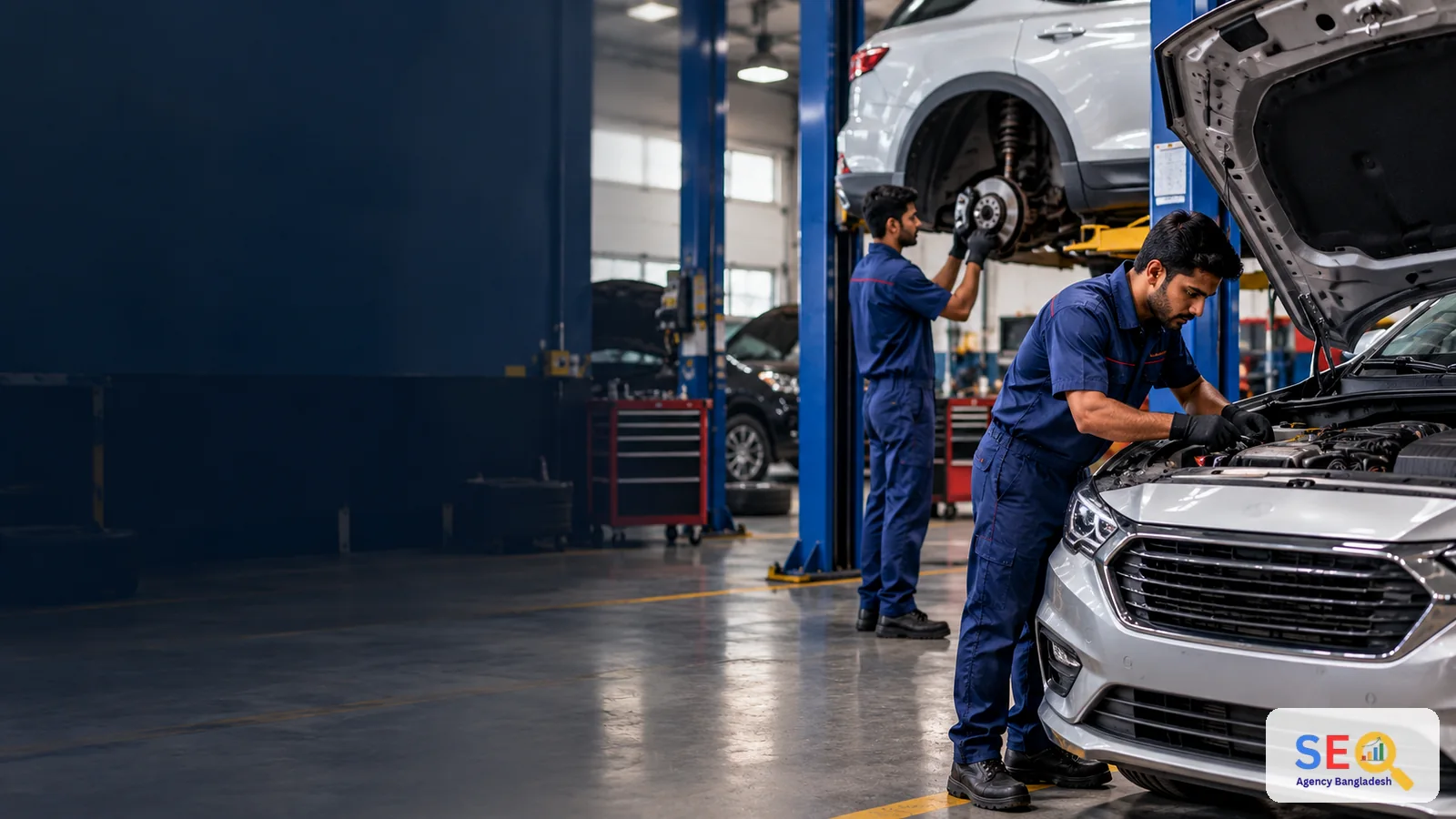
Automotive SEO in Bangladesh for More Workshop Bookings
Car owners usually search with a problem, a service or a nearby workshop in mind. We connect repair and maintenance pages, local visibility, workshop trust and booking paths so the right driver can find the right service without wading through duplicate location pages or vague “all car service” copy.
Automotive search starts with the car problem—not your workshop menu
A driver may know the exact service they need, or only a symptom. The site has to bridge that gap: make useful services discoverable, show where the workshop is, explain what happens next and give the customer a quick route to call, WhatsApp or book.
Problem or symptom
AC not cooling, brake noise, warning light, battery trouble or a vehicle that needs diagnosis. Helpful pages translate real customer language into the services the workshop actually provides.
Known service
Engine diagnostics, oil change, brake repair, suspension, AC service, electrical work, wheel alignment or another clear maintenance/repair need.
Workshop + location
The search becomes local when the owner wants a garage they can reach, checks opening hours, Maps, directions, phone details and whether the workshop handles their vehicle type.
Trust + booking
Before handing over a vehicle, customers compare visible workshop quality, service information, reviews, diagnostics capability, contact clarity and the ease of getting a quote or appointment.

Your strongest pages should match the jobs customers already ask the workshop to do
Current Dhaka workshop sites commonly separate diagnostics, engine work, AC, brakes, suspension, electrical troubleshooting, oil changes and scheduled maintenance because those services solve different customer problems. An SEO plan should reflect the real service operation rather than inventing pages for keywords the workshop cannot support.
A workshop is usually a storefront business; roadside support can make it hybrid
For a physical garage that receives vehicles, the Google Business Profile should represent the real workshop address, hours, phone, website and service categories accurately. If the same business also sends a roadside team to customers, Google describes that model as a hybrid business.
Our Local SEO services can align the website and Business Profile without inventing extra workshops, virtual offices or location pages.
Storefront workshop
- Use the genuine customer-facing workshop address.
- Keep opening hours and direct phone details current.
- Show useful photos of the real facility, bays and service environment.
- Connect the profile to the workshop or branch page that matches it.
Workshop + roadside service
- Keep the real workshop storefront and add a genuine service area.
- Describe roadside or mobile services only if the business actually offers them.
- Do not treat service-area settings as a way to rank equally across every city.
- Use organic location content only where the workshop has meaningful local relevance.
The workshop can be excellent while the website still hides what it does
Auto-service sites often lose useful search demand through vague service pages, duplicated brand/location content, old offers, weak mobile booking and image-heavy pages that never explain the repair capability.
Everything on one generic services page
Important repairs have no clear URL to rank, link to or measure. Split only the services that deserve distinct pages and keep small items consolidated.
Duplicate brand and model pages
Hundreds of thin vehicle pages can compete with one another. Create specialist vehicle pages only when there is unique capability and content.
Workshop photos with no context
Real facility and repair images build trust, but the surrounding HTML still needs clear service headings, useful explanations and descriptive image attributes.
Slow mobile pages
Large galleries, sliders and scripts can make a local service page painful to use. Fixes can connect into technical SEO and WordPress speed optimization.
Booking detached from the service page
A driver should not need to re-explain the page they came from. Calls, WhatsApp and booking requests should preserve the service context where the site setup allows it.
Diagnose the search problem before prescribing more content
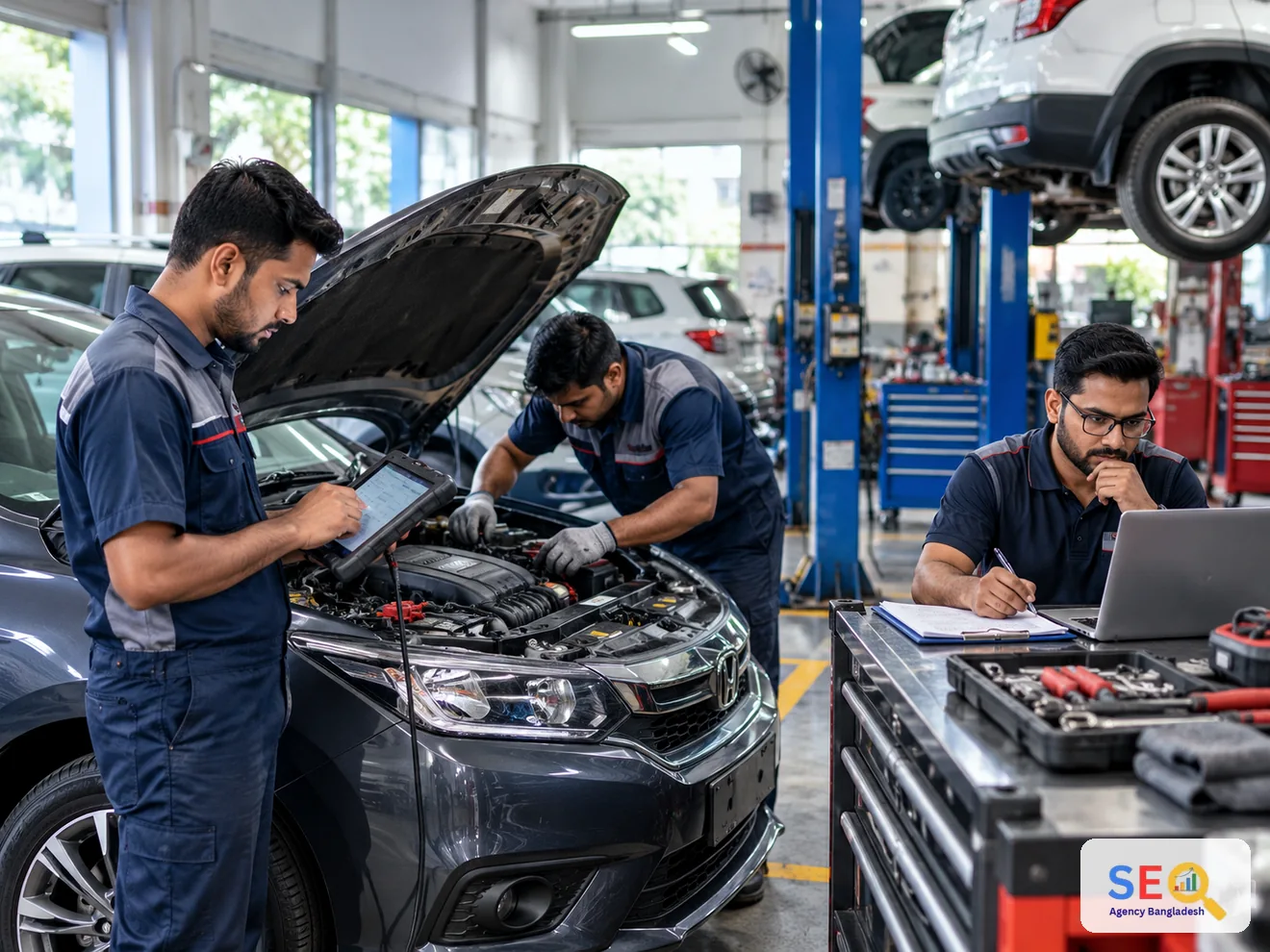
The workflow mirrors a good workshop: inspect first, find the cause, then fix what matters. Larger or older sites can begin with a complete SEO audit.
Inspect the current search footprint
Review Search Console, rankings, indexed service pages, local profiles, competitor structures, mobile performance and booking paths.
Map services to one URL owner
Separate broad workshop searches, individual repair services, specialist vehicle intent and genuine branch/local intent.
Improve commercial pages
Refine titles, headings, service descriptions, workshop photography, internal links and calls to action. Where useful information is missing, SEO content writing can fill the real gap.
Fix local and technical blockers
Align Business Profile information, resolve crawl/index issues, improve mobile usability and make priority service pages fast enough to use.
Measure bookings, not just position
Track which repair/service themes lead to calls, WhatsApp, booking requests or useful enquiries, then use the evidence to choose the next work.
The page should make it easier to bring the car in
Local workshop sites are often judged on a phone. The customer needs enough information to trust the workshop, but the booking route should stay simple.
A useful booking flow can ask for the vehicle model, service/problem, phone number and preferred date without forcing every customer through a long account-creation process.
The booking action should retain the repair or maintenance service the customer was viewing.
Model/year or vehicle type can help the workshop qualify a request before the appointment.
Show genuine hours and branch/location details so customers do not book against unclear availability.
Phone and WhatsApp remain practical options for customers who need to explain a symptom instead of choosing a service name.
Measure the path from a service search to a real workshop enquiry
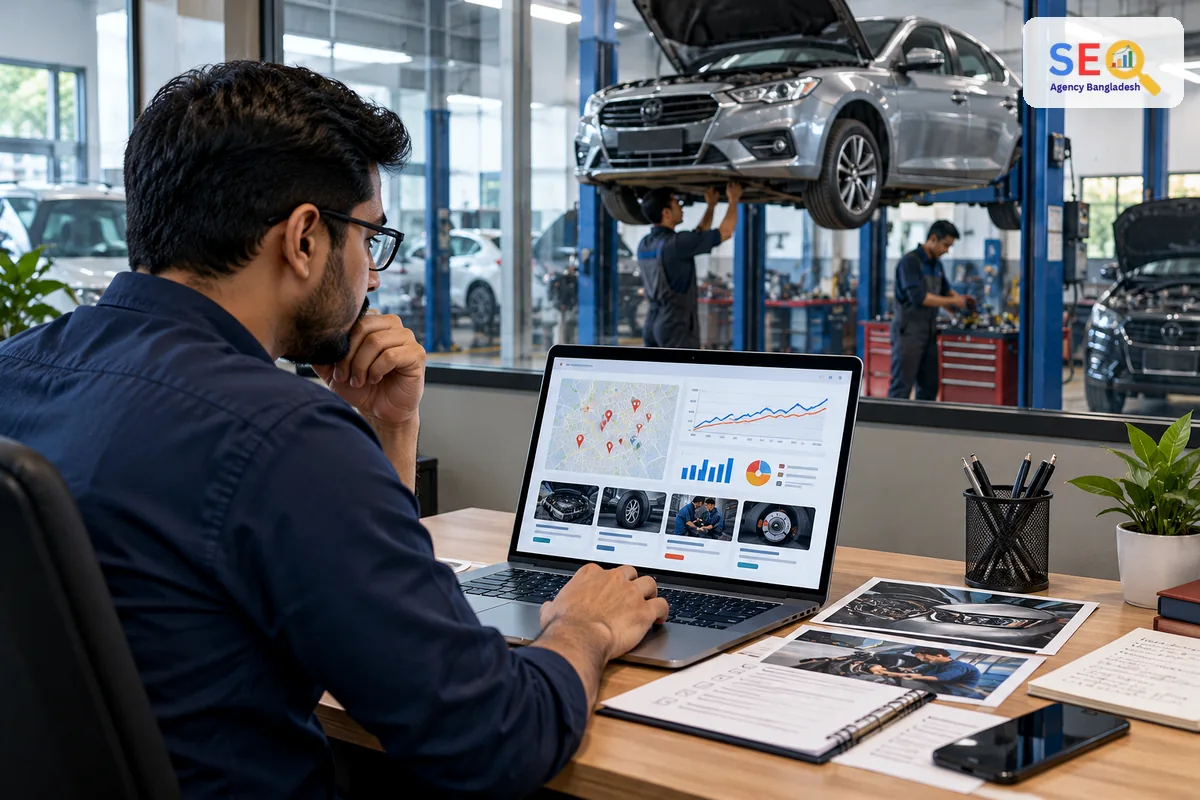
We use Search Console, analytics and available booking/contact data to see which services and local searches produce useful demand. Rankings are part of the picture, not the final business result.
Impressions and clicks for real repair, servicing and diagnostic clusters.
Organic and Business Profile visibility around real workshop locations and service areas.
Index status, mobile usability and performance for pages closest to booking intent.
Calls, WhatsApp clicks, appointment requests or quote actions the site is configured to measure.
Which service themes create useful workshop enquiries instead of low-fit traffic.
Automotive SEO decisions that keep the site useful
A workshop site can become bloated fast if every brand, service and location automatically becomes a landing page.
Should every car repair service have a separate SEO page?
No. Give a service its own page when customer intent is distinct and the workshop genuinely provides enough capability and information to support it. Small related maintenance items can stay consolidated.
Should we create pages for every car brand and model?
Only when the workshop has real specialist capability and can provide useful, unique information. Hundreds of near-identical model pages can create thin content and internal competition.
Can an auto workshop use service areas in Google Business Profile?
A workshop that receives customers at its real storefront can display that address. If it also travels to customers for services such as roadside assistance, it can operate as a hybrid business and define a genuine service area.
How important are reviews for automotive local SEO?
Reviews are one local trust and prominence signal, but they are not the only factor. Accurate business information, relevance, distance, website quality and broader prominence also matter. Review activity should be genuine and handled without fabricated ratings.
How long does automotive SEO take?
There is no reliable fixed timeline. Results depend on the current website, local competition, service coverage, technical condition, authority and how quickly recommended work can be implemented. We establish a baseline and track visibility, page health and booking/contact actions.
What owns the commercial automotive SEO keyword?
This `/automotive-seo/` page owns the commercial automotive SEO service intent in the supplied sitemap. Any future supporting how-to, checklist or guide content should stay informational and link back here instead of targeting the same money keyword.
Start with the repair jobs and workshop locations you actually want to grow
We can review your service pages, workshop locations, local profiles, technical setup and search data, then identify what should be improved, consolidated or built next. The goal is a cleaner path from automotive search to a real call, WhatsApp message or service booking.