
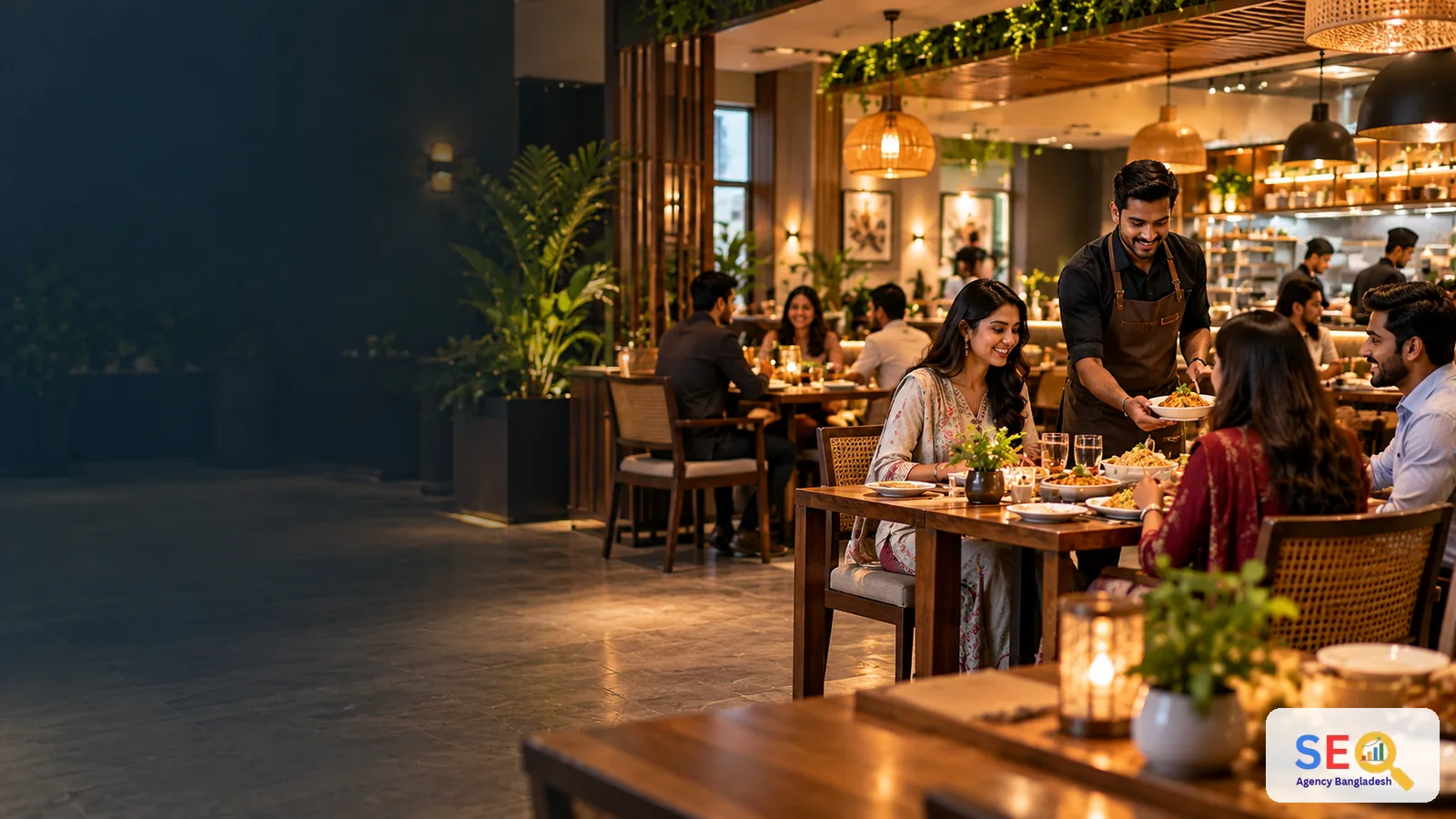
Restaurant SEO in Bangladesh for More Local Diners, Bookings and Orders
Restaurant search is immediate. A diner wants a cuisine, a nearby place, a menu, opening hours, reviews and a fast next action. We connect your website, local profiles, branch pages and menu discovery so more of those searches reach a real table booking, call, direction request or order.
Search usually starts with hunger, occasion or location—not your brand name
A customer may search for biryani, a rooftop cafe, family dining, buffet, coffee, a late dinner or a restaurant near a specific area. Strong restaurant SEO makes those commercial choices easy to understand before the diner has to visit several apps and profiles.
Choose a cuisine or occasion
Food type, meal, atmosphere and occasion shape the first query. Pages should describe what the restaurant really offers rather than forcing every cuisine phrase into one homepage.
Check location and hours
Nearby diners need a genuine branch, correct opening hours, directions and confidence that the location they found is actually open when they plan to go.
Scan the menu and proof
Menu availability, dish photos, price context where published, reviews, ambience and practical service details help a customer decide whether the restaurant fits the group.
Act immediately
Call, reserve, get directions, view the menu or order. The best landing page keeps those actions obvious on a phone without burying them under generic brand copy.
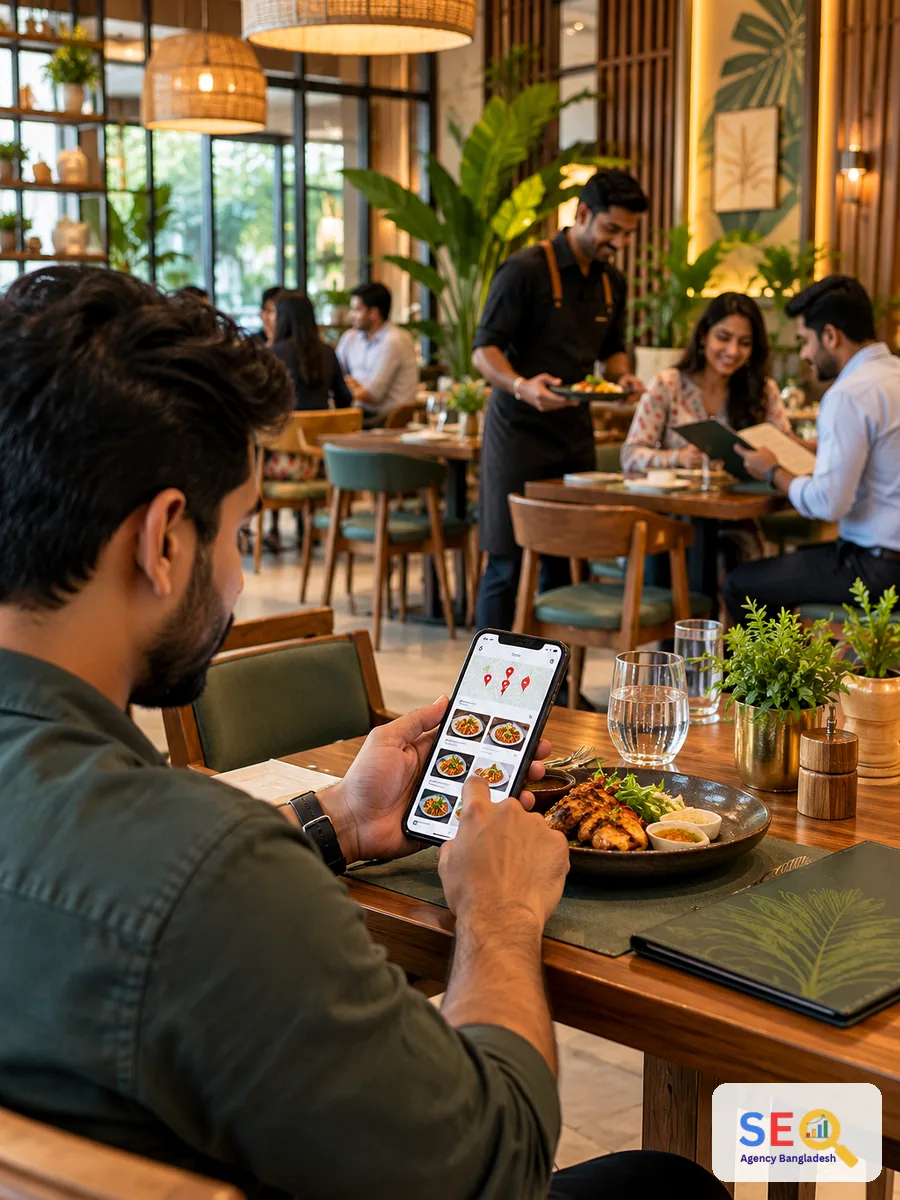
A restaurant page should answer “what, where and can I go now?” quickly
Restaurant and cafe SEO becomes stronger when website content matches how people choose food in real life. We use keyword research to separate cuisine, branch, menu and occasion intent before deciding which pages deserve search visibility.
Treat each real branch profile like a digital front door
A restaurant profile can help customers find the menu, hours, location, photos and action links. The website and profile should agree. Our Local SEO services cover the broader local strategy, while Google Maps SEO and Google Business Profile optimization own their specialist service intent.
One accurate profile per eligible restaurant location
Keep the genuine business name, category, address and direct phone details consistent. Do not manufacture extra Maps locations for areas without a real eligible branch.
Make “open now” information dependable
Standard, special and holiday hours should match real operations. Wrong opening times can waste a high-intent visit even when visibility is strong.
Keep menu information easy to reach
Maintain a useful menu URL and, where the profile features are available, keep menu sections, dishes, descriptions and prices current enough to help diners decide.
Connect reservations and ordering to a clear destination
Where supported, booking, food-ordering, pickup or delivery links should send users to the intended restaurant or provider—not a generic page that makes them select the branch again.
Use a real response workflow
Reviews influence the diner decision and need genuine, policy-compliant handling. Deeper reputation work belongs under our online review management service.
Do not turn one restaurant into dozens of doorway pages
Restaurant websites often become repetitive when every cuisine, branch and neighborhood gets a thin variation. We map one primary search role to each page and use on-page SEO to strengthen that owner instead of creating clones.
Own the brand, overall concept, core cuisine and primary commercial proposition.
Own a genuine location with its address, phone, hours, directions, photos and branch-specific information.
Create only when the menu or cuisine has enough distinct search and user value to deserve a stable landing page.
Separate when private dining, catering or event service is a real offer with a different customer journey.
Keep how-to and local-search education outside the commercial landing page so it supports rather than competes.
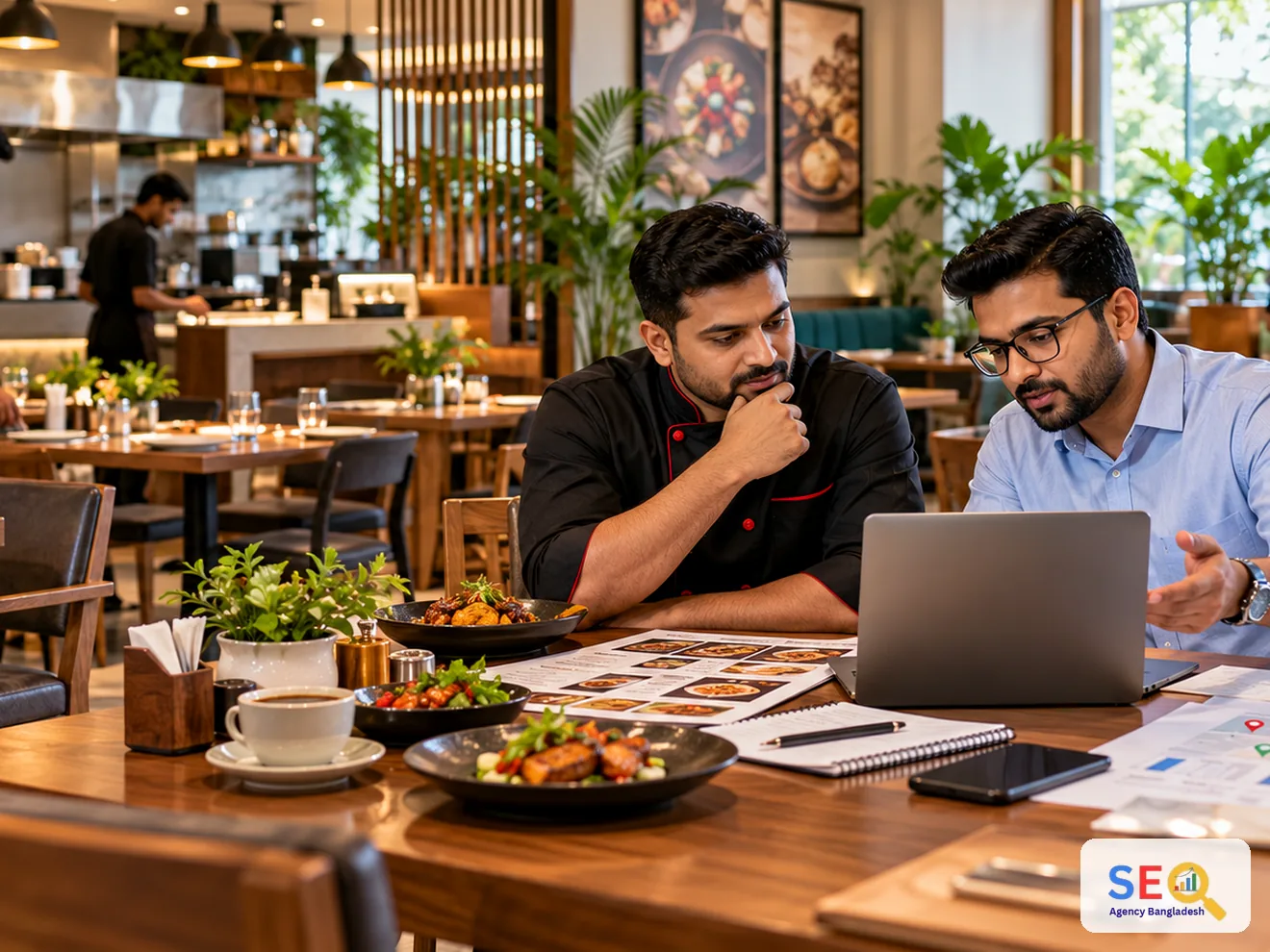
Audit the guest journey before publishing more location pages
We start with what diners can actually do: visit a branch, browse the menu, reserve, call, order or request an event. Larger restaurant groups or older websites can begin with a complete SEO audit.
Map the real restaurant footprint
Review branches, cuisines, menus, service modes, opening hours, reservation or ordering paths and the URLs that currently represent them.
Separate brand, cuisine and location intent
Decide which searches belong to the homepage, a branch page, a menu/cuisine page or an informational article.
Improve high-intent landing pages
Refine headings, menu context, ambience photography, branch details, internal links and calls to action. If important copy is missing, SEO content writing can support the gap.
Fix local and technical blockers
Align profiles and branch pages, address crawl/index issues, compress large food galleries and make important mobile actions quick to reach.
Measure diners' actions by location
Track useful organic and local signals around calls, directions, menu visits, reservation clicks or ordering actions where the site's tracking setup supports them.
A beautiful food site still fails if diners cannot find the menu or branch
Restaurants naturally use photography, video and visual menus, but those assets can make mobile pages slow or hide important information. Technical work should protect the experience without flattening the brand.
Menu trapped in an image or PDF
Keep useful menu content readable on a phone and expose important cuisine and category information in crawlable HTML where practical.
Heavy galleries before useful information
Use sharp images, but prioritize the menu, hours, location and CTA before loading an oversized gallery or decorative video.
One contact page for every branch
A multi-location restaurant should make each eligible branch easy to identify and connect the diner to its correct phone, directions and hours.
Reservation or order links that lose context
Send users to the correct branch or ordering destination when the system supports it instead of asking them to restart the decision.
Slow mobile performance
Large image files, third-party widgets and scripts can delay the exact actions a diner needs. Deeper fixes can connect to technical SEO.
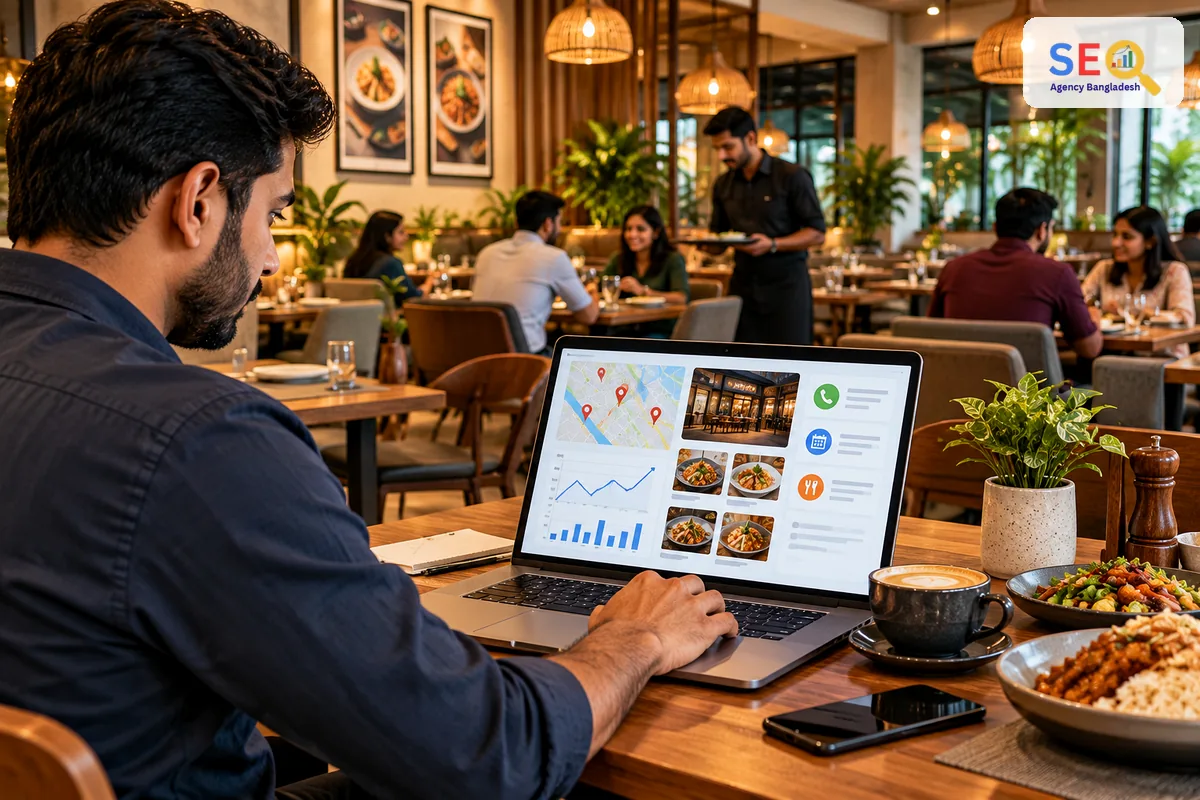
Measure whether search helps a diner choose the restaurant
Search Console, analytics and available Business Profile or booking data can show which cuisine, branch and menu themes attract useful demand. Rankings are context; the business result is whether the right local customer takes a real next step.
Search exposure for cuisine, cafe, restaurant and branch-relevant queries.
Organic or profile journeys that reach the actual menu or high-value cuisine pages.
Calls, directions, website clicks or other profile actions available in reporting.
Clicks or completed actions where the reservation or ordering system can be measured reliably.
Priority branch, menu and commercial pages indexed and usable on mobile.
The sitemap already assigns Restaurant Local SEO Guide Bangladesh to educational local-search intent. It should teach the how-to process and link here, while this page keeps ownership of the commercial restaurant SEO service.
Restaurant SEO choices that protect local relevance
The strongest setup follows the real business: actual branches, real cuisines, current menus and the actions diners can genuinely take.
Does every restaurant branch need its own page?
A genuine customer-facing branch usually benefits from a dedicated page when it has its own address, contact details, hours, directions and useful local information. Thin pages for areas without a real branch should be avoided.
Should the full menu be available as HTML?
Important menu categories and decision information should be mobile-friendly and crawlable where practical. A downloadable PDF can still be useful, but it should not be the only way a diner or search engine can understand the menu.
Can a restaurant rank in every nearby area with service-area pages?
A physical restaurant should represent its real location and genuine operating model. Creating copied neighborhood pages or fake profiles does not create legitimate proximity and can weaken local relevance.
How important are Google reviews for restaurant SEO?
Reviews are highly visible during restaurant selection and support local trust. The workflow should focus on genuine customer feedback and helpful responses rather than bought, gated or fabricated reviews.
Should delivery-platform pages replace the restaurant website?
No. Delivery platforms can be important sales channels, but the restaurant's own site remains the place to control branch information, menus, brand content, organic landing pages and the links sent from local profiles.
How long does restaurant SEO take?
There is no reliable fixed timeline. Progress depends on competition, branch footprint, current profile quality, website condition, content, authority and implementation speed. We establish a baseline and measure useful local and conversion actions over time.

Start with the branches, cuisines and guest actions that matter most
We can review your restaurant website, menu structure, Business Profiles, branch pages and current search data, then identify what should be corrected, consolidated or built next. The aim is a cleaner route from local search to a real booking, order, call or visit.