

Real Estate SEO in Bangladesh for Property Projects That Need Qualified Enquiries
Real estate SEO connects the searches buyers make about locations, property types, projects and developers with pages that help them compare and take the next step. We build that path for Bangladesh property businesses without relying on thin location pages or ranking promises.
Real estate search is not one keyword
A serious buyer may begin with a broad area or property type, narrow the search to a project or developer, then verify details before calling, messaging or visiting a sales office. Your site needs useful pages for each stage, with a clear route between them.
-
01
Explore an area and property type Examples include apartment, plot or commercial-space searches combined with places such as Uttara, Bashundhara, Dhanmondi, Mirpur or another target market you actually serve.
-
02
Compare projects and developers The search becomes more specific. Buyers want a project page that explains the location, unit options, current status, floor-plan context, amenities, developer information and a simple enquiry path.
-
03
Verify, shortlist and enquire Brand searches, Maps, project-name searches and trust questions matter late in the journey. SEO should make it easy to move from research to a call, WhatsApp conversation, brochure request or sales visit.

Build around projects and decisions, not stacks of keyword pages
The strongest property websites give each useful page one job. That reduces cannibalization, makes internal linking clearer and gives buyers a better experience than a site filled with near-duplicate area and project pages.
This service page owns the commercial “real estate SEO in Bangladesh” intent. The planned Real Estate SEO Guide Bangladesh should remain informational and support this page rather than compete with it.

Map demand to the property inventory before writing more content
We start with the real business structure: projects, locations, property types, sales priorities and the pages already in the index. The result is a plan that says what should rank, what should be consolidated and what should not be created at all.
Find the search and site gaps
Review rankings, Search Console data, crawl/index issues, competing pages and current lead paths. A deeper diagnosis can connect into our complete SEO audit.
Map keywords to one clear URL owner
Separate area, project, developer, buyer-guide and brand intent. Our keyword research and page mapping process is designed to reduce overlap before it becomes a content problem.
Improve the pages buyers actually need
Refine titles, headings, page copy, images, internal links and enquiry paths with on-page SEO. Where pages lack useful information, SEO content writing supports the missing buyer questions instead of padding word count.
Implement, check and learn from the data
Resolve priority technical issues, publish the right pages, validate indexing, then watch impressions, clicks and enquiries by project and search cluster. Strategy changes when the evidence changes.
Property filters can create crawl waste faster than they create useful search pages
Price, area, bedroom, project status and property-type filters are useful for visitors. But if every filter combination creates a crawlable URL, a property site can multiply thousands of thin or duplicate pages. The technical plan needs to separate useful landing pages from filter states that should not compete in search.
Index deliberately
- Core developer, project and genuinely useful location/property pages.
- Unique project URLs with crawlable internal links and consistent canonicals.
- Pages with current, useful facts instead of brochure-only marketing language.
- Important images, floor-plan context and descriptive alternative text where appropriate.
Control what multiplies
- Parameter combinations created only by sorting and filtering.
- Duplicate project variants, print views or repeated listing states.
- Empty or expired combinations that return no useful inventory.
- JavaScript-only navigation that hides important project links from a normal crawl path.
Google’s crawling guidance specifically warns that faceted navigation can create very large URL spaces and slow discovery of useful URLs. For larger property catalogs, this is a core part of our technical SEO work, not a cleanup item for later.
Local search is valuable only when the location is real
Property companies often have a real office, sales center or service location that can support local discovery. We optimize eligible business locations and connect them with the right website pages. We do not recommend creating fake profiles or pretending every project area is a staffed office.
- Connect genuine locations with clear contact and service information.
- Align Google Business Profile details with the website where the business is eligible for a profile.
- Use meaningful location pages only when there is real inventory, service coverage and unique buyer value.
- Measure calls, direction actions, website visits and enquiries alongside organic search performance.
See our broader Local SEO services and specialist Google Business Profile optimization.
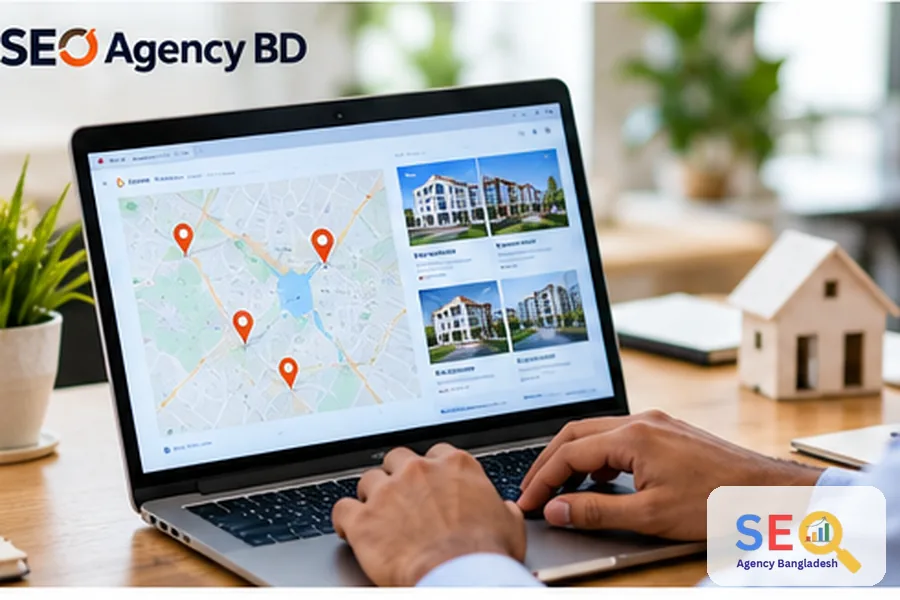
A useful property content system gives buyers something portals cannot say for you
Your project pages should contain the facts only your business can maintain accurately. Supporting content should answer the questions buyers ask before they are ready to choose a project. The two should be connected with natural internal links, not a mass of pages built only to target exact-match phrases.
Project decision pages
Keep project status, location context, unit choices, floor-plan information, amenities, construction or handover context, media and enquiry actions accurate to what your sales team can verify. That creates a page worth ranking and revisiting.
Area and buyer intelligence
Create location or buyer guides when they add real value: access, nearby demand drivers, property types, decision factors, documents or process questions. A guide should help a buyer understand the market, not just repeat a city name.
Authority beyond your own site
Relevant mentions and links can strengthen discovery, but quality and context matter more than volume. Our link building service focuses on relevance and authority rather than spam-link counts.
Measure the route to enquiry, not just the ranking
Keyword positions are useful diagnostics, but they are not the business outcome. We use Search Console, analytics and available lead-source data to see which projects, locations and search themes are bringing qualified attention and where visitors drop out.
Impressions and clicks for property, project-type and location clusters.
Which project and area pages enter search, gain visibility and attract engaged visitors.
Important pages indexed; duplicate, filtered and low-value URLs controlled.
Website visits, calls and other location actions where local profiles apply.
Calls, WhatsApp clicks, brochure requests, forms or booking actions available on your site.
Which search themes produce useful conversations for the sales team, not simply more sessions.
Why the work fits real estate websites
Real estate SEO questions we would settle before starting
The answers depend on your project inventory, website and sales model. These are the decisions that keep an SEO campaign tied to real business use.
How is real estate SEO different from general SEO?
Property websites have unusually strong location, project and inventory relationships. They also tend to use filters, repeated listing layouts and project status changes. Real estate SEO therefore needs careful page architecture, crawl control and conversion planning alongside normal on-page, content and authority work.
Should every property area have its own SEO landing page?
No. Create a dedicated area page only when it has enough unique inventory, context and search purpose to help a buyer. Thin pages made by swapping area names can compete with each other, weaken trust and create maintenance problems.
What happens when a project is sold out or completed?
Do not remove a useful URL automatically. First decide whether the page still answers brand or project searches, whether a newer related project is a sensible next step, and whether the page has links or traffic worth preserving. The best action may be to keep the page with a clear status, update it, or redirect only when there is a genuinely equivalent destination.
Can SEO help an individual real estate agency as well as a large developer?
Yes, if the site has a clear market, real services or inventory, and pages that answer the searches its buyers make. The scale of the architecture changes, but the same principles apply: one URL owner per intent, useful local/project information, crawlable pages and measurable enquiry actions.
How long will real estate SEO take?
There is no reliable fixed timeline. It depends on the current site, competition, technical health, content quality, authority, inventory and how quickly recommended changes can be implemented. We establish a baseline and report leading indicators such as index quality, impressions, relevant clicks and enquiry actions before making larger performance conclusions.
Does SEO replace property portals or paid advertising?
Not necessarily. Portals and ads can support immediate reach, while SEO builds discoverability on the website you control. The strongest decision is based on your lead economics, inventory and sales cycle rather than treating one channel as a universal replacement for the others.

Start with the projects and searches that matter to your sales team
We can review your current property website, project structure, target locations and search visibility, then identify what should be fixed, consolidated or built next. No ranking guarantee—just a clear SEO plan tied to how buyers find and evaluate property.