
Local SEO Guide
Local SEO Ranking Factors Bangladesh Businesses Should Know in 2026
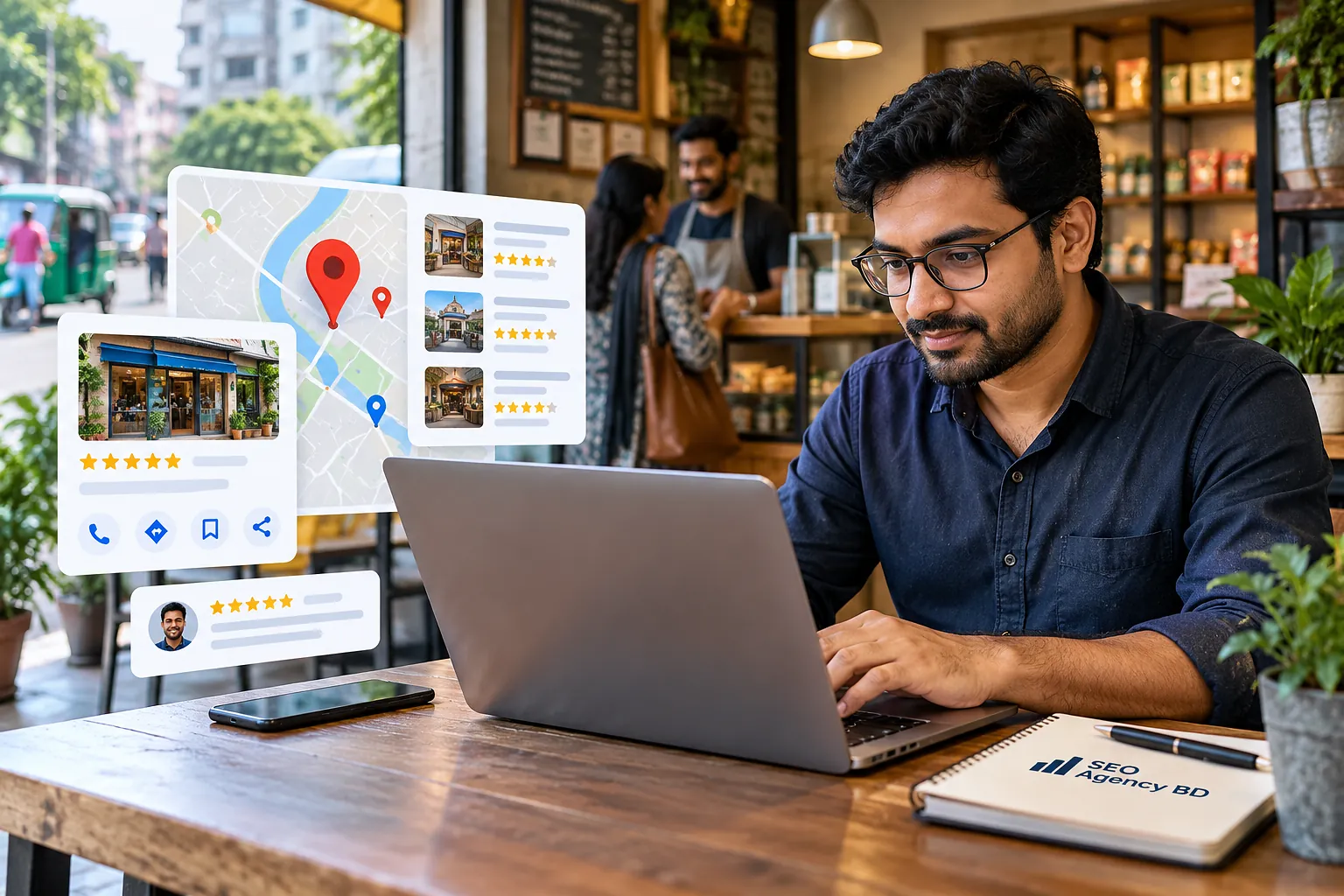
This guide explains the local SEO ranking factors Bangladesh businesses should prioritize in 2026. Google says local results are mainly shaped by relevance, distance and prominence. For a Bangladesh business, the practical work is to make your Business Profile and website clearly relevant, keep location details accurate, build genuine reviews and local authority, and remove technical or content problems that weaken the result.
Start with Google’s three-part local ranking framework
Google does not publish a weighted list of every local ranking factor. It does publish the framework behind local results: relevance, distance and prominence. Google also says there is no way to request or pay for a better local ranking. That matters because it separates useful optimization from the shortcuts that often waste time.
| Core factor | What it means | What a Bangladesh business can do |
|---|---|---|
| Relevance | How well the business matches the search. | Choose accurate categories, describe real services clearly, complete the Business Profile, and build useful service/location pages. |
| Distance | How far the business is from the searcher or the place named in the query. | Keep the real address, map pin and service area accurate. You cannot legitimately “SEO” a distant business into being physically closer. |
| Prominence | How well known and established the business appears online and offline. | Earn genuine reviews, relevant links, local mentions, directory references and stronger organic visibility. |
This framework applies in Bangladesh just as it does elsewhere. The local detail comes from how people search: a service plus a city, neighborhood or nearby landmark; a “near me” query; or a category search inside Google Maps. A clinic in Dhanmondi, a restaurant in Chattogram and an AC repair business serving Uttara may all compete in local search, but the pages, categories, reviews and location signals they need are different.
The local SEO ranking factors to prioritize in Bangladesh
1. Google Business Profile category and service relevance
Your primary Business Profile category tells Google what type of business you are. Pick the closest real category, then add relevant secondary categories only where they genuinely describe the business. Fill in services, hours, contact details and other available fields accurately. A complete profile gives Google more context and gives customers fewer reasons to leave and search again.
If the profile is weak or incorrectly categorized, improving the website alone may not be enough for Maps visibility. For businesses that need help with the profile itself, the dedicated Google Business Profile optimization service covers that narrower task.
2. Proximity and real location accuracy
Distance is one of the three factors Google names directly. If someone searches from Banani, a genuinely nearby business may have an advantage over a similar business much farther away. That does not mean the closest business always wins; relevance and prominence can change the order. It does mean that fake locations, virtual-address tricks and duplicate profiles are not a sound ranking strategy.
Check that your address or service area is represented correctly, the map pin is in the right place, and customers are not being sent to an old or inaccurate location.
3. Genuine reviews, review quality and ongoing reputation
Google explicitly says review count and review score can influence local ranking. Reviews also affect the human side of the result: a business with current, detailed customer feedback is easier to trust than one with an empty or neglected profile.
The safe approach is simple: ask real customers for honest feedback, make the review link easy to use, and reply professionally. Do not pay for reviews, offer discounts for a five-star rating, or ask only happy customers while blocking negative feedback. Google’s policies prohibit fake and incentivized engagement. A practical review workflow belongs in online review management , not in shortcuts that put the profile at risk.
4. A website page that matches the service and the location
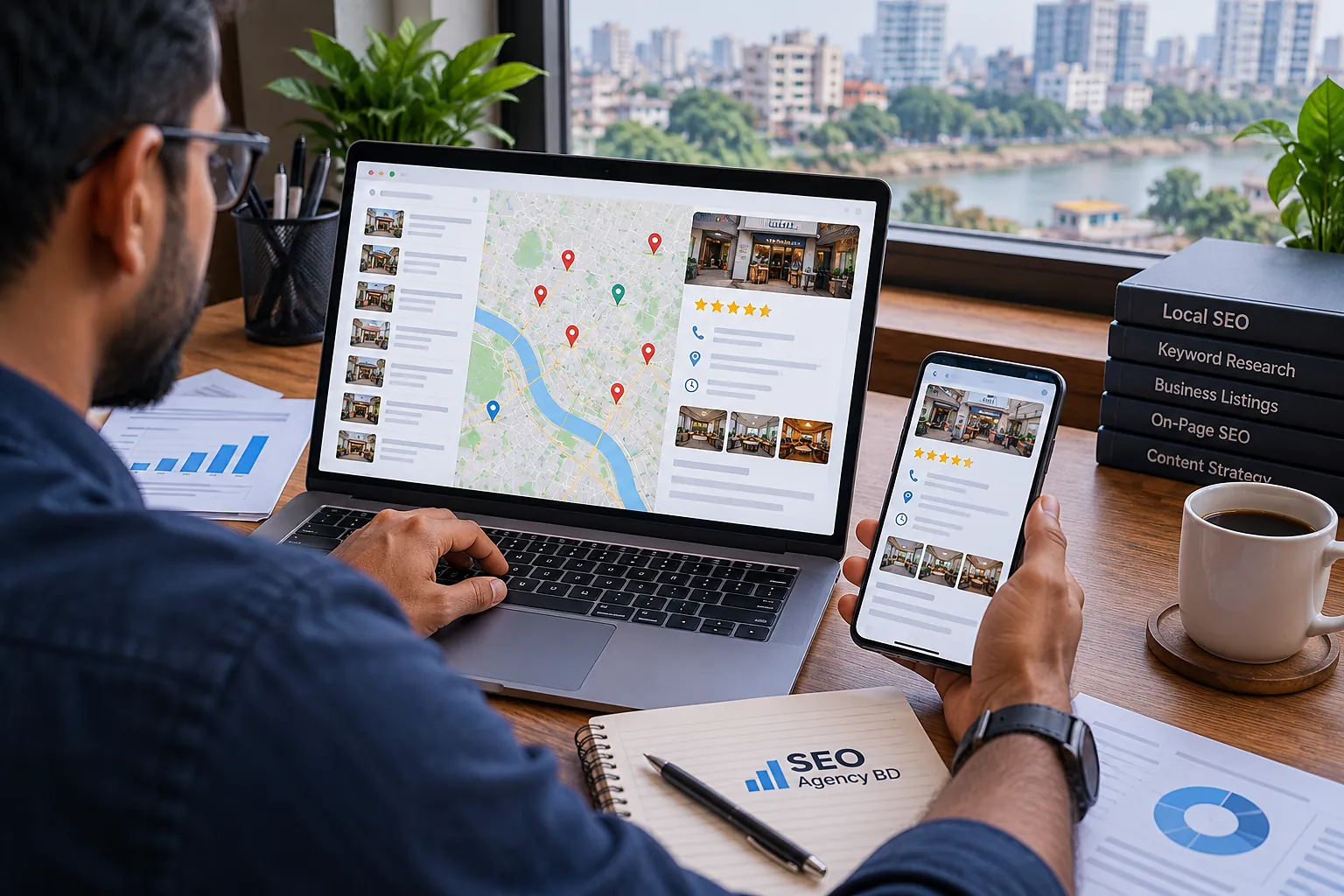
Maps and the website are not separate systems. Google states that your position in web results is also a factor in local ranking, so normal SEO work still matters. The page connected to your Business Profile should clearly explain what you do, who you serve and where the service is available.
For example, a dental clinic should have strong pages for its real treatments, not one vague “services” page stuffed with every Dhaka area. A home-service business can explain its genuine service coverage without creating dozens of near-duplicate location pages. The goal is a page that deserves to rank for the local query, not a city-name template.
5. Consistent business information across the web
Your name, address and phone details should not contradict each other across your website, Business Profile and important business listings. Consistency reduces ambiguity for customers and supports the broader web evidence Google uses to understand prominence.
Do not treat citation building as a numbers game. Ten accurate, relevant references are more useful than hundreds of weak listings with old phone numbers, duplicated businesses or invented addresses. If listings are already messy, local citation building and cleanup should start with correction, not mass submission.
6. Local links, mentions and real-world prominence
Google describes prominence using information it finds across the web, including links, articles and directories. In practical terms, a business earns stronger local authority when reputable local or industry sites have a real reason to mention it.
Useful examples include a supplier page, an industry association, a local event partner page, a university or professional resource, a chamber or trade directory, or local news coverage. The common theme is legitimacy. Buying unrelated backlinks from random sites may increase link count without building the kind of local prominence a real business needs.
7. Technical health, mobile usability and indexability
A local business site still needs to be crawlable, fast enough to use, secure and easy to navigate on a phone. If Google cannot reliably index the important service and location pages, those pages cannot support local organic visibility well. If a user lands on the site from Maps and the page is broken or hard to use, the ranking may be the least of your problems.
Keep the technical work practical: index the right pages, fix broken internal links, use descriptive titles and headings, compress images, avoid layout shifts and make phone or WhatsApp actions easy to tap. For deeper site issues, see technical SEO optimization .
8. Accurate business name instead of keyword stuffing
Adding extra service or city keywords to the Business Profile name can look tempting when competitors do it. Google’s representation guidelines say the profile name should match the real-world business name used on signage, the website and stationery. Unnecessary information in the name is not permitted and can create profile problems.
Use the category, services, description and website to explain what the business does. Do not turn the business-name field into an SEO title tag.
A useful way to think about it: local SEO is not “optimize the map listing, then stop.” The profile, website, reviews and wider web references need to tell the same believable story about the business.
Google Maps ranking factors vs. local organic ranking factors
The Local Pack and normal organic results often appear on the same search page, but they do not rely on exactly the same mix of signals. For Maps, Business Profile relevance and the searcher’s distance are especially visible. For local organic results, the strength and relevance of the website page matters more directly.
| Area | Google Maps / Local Pack | Local organic results |
|---|---|---|
| Location | Proximity to the searcher is a core factor. | Location relevance comes mainly from page content, site architecture and authority. |
| Business Profile | Categories, profile accuracy, reviews and completeness matter directly. | Supports entity understanding but does not replace a strong website page. |
| Website | Helps Google understand services and contributes to prominence. | Central: content quality, internal links, technical health and backlinks shape rankings. |
| Reviews | Ranking and conversion value are both important. | Mostly trust and entity support rather than a substitute for organic SEO. |
For a business that depends heavily on Maps, a focused Google Maps SEO program can go deeper into map visibility, profile quality and local-pack tracking. This article stays on the informational side: what the signals are and how to prioritize them.
How these factors play out for Bangladesh businesses
Local SEO becomes easier to understand when you stop thinking in generic “ranking factor” terms and look at a real search situation.
Dhanmondi dental clinic: the biggest opportunities may be correct dental categories, complete treatment information, a useful Dhanmondi clinic page, accurate hours, recent patient reviews and strong local/medical mentions. Adding “best dentist Dhanmondi” to the business name is not the right fix.
Uttara AC repair business: service relevance, clear service-area information, mobile-friendly landing pages, fast contact options and genuine customer reviews matter. Creating twenty thin pages that only swap neighborhood names creates more SEO risk than value.
Chattogram restaurant: the profile must be accurate when a customer checks opening hours, phone, location and photos. Reviews and prominence can help discovery, but the information must also convert a hungry searcher into a visit or call.
Local SEO mistakes that can hold rankings back
Many ranking problems come from mixed signals rather than a missing “secret factor.” These are the issues we would check early in a Bangladesh local SEO audit:
- Wrong or vague primary category: the profile does not clearly match the service people search for.
- Keyword-stuffed business name: extra city or service terms are added even though they are not part of the real brand name.
- Old contact details: the website, profile and listings show different phone numbers, addresses or hours.
- Fake or incentivized reviews: this violates Google policy and can trigger review removal or profile restrictions.
- Thin city pages: dozens of nearly identical pages are created only to rank for area names.
- Weak service pages: the site does not explain the actual services behind the Business Profile categories.
- No local authority building: there are few trustworthy mentions, links or relevant directory references.
- Technical indexation problems: key pages are blocked, duplicated, orphaned or difficult for search engines to crawl.
A practical 30-day priority plan
You do not need to work on every local SEO signal at once. Start with the items that remove confusion and strengthen relevance, then build prominence.
Week 1: Fix the foundation
- Verify the correct Business Profile is being managed.
- Check real business name, primary category, address/service area, phone, website URL and hours.
- Compare the profile information with the website and key listings.
- Confirm the correct service/location page is linked from the profile.
Week 2: Improve relevance
- Add or improve real services and supporting profile information.
- Rewrite weak website pages so each page has one clear service and search intent.
- Strengthen internal links between the local service hub and specialist pages.
- Remove obvious duplication or city-name stuffing.
Week 3: Build trust signals
- Create an ethical review-request process for recent customers.
- Reply to existing reviews where a useful response is appropriate.
- Correct inconsistent citations and important directory profiles.
- Look for legitimate local or industry mentions worth earning.
Week 4: Measure and refine
- Review Search Console queries for service + location patterns.
- Track calls, website clicks, direction requests or other relevant Business Profile actions.
- Check local-pack visibility from several real areas instead of one desktop search.
- Prioritize the next month based on gaps, not on a generic SEO checklist.
How to measure whether local SEO is improving
Rankings are useful, but they are not the only KPI. Local visibility can change by search location, device and query wording, so a single screenshot is weak evidence.
A better monthly view combines:
- Business Profile actions: calls, website visits, direction requests and other available interaction data.
- Search Console: local queries, clicks, impressions and landing pages.
- Local visibility tracking: map-pack positions from several points in the actual service area.
- Review health: new genuine reviews, response process and recurring customer concerns.
- Lead quality: whether local enquiries match the services and areas the business wants.
The goal is not to make every number move up every month. It is to understand which changes improved discovery, which improved conversion, and which parts of relevance, distance or prominence still limit visibility.
Where should you focus first?
If your Business Profile has wrong categories or incomplete information, start there. If the profile is strong but the linked website page is thin, fix the page. If both are strong and competitors still have a much larger body of genuine reviews and local authority, build prominence. If the problem changes from one neighborhood to another, distance may be doing more work than any on-page tweak can overcome.
For businesses that want the work handled as an ongoing service rather than a DIY project, Local SEO services in Bangladesh is the commercial page for audits, implementation and ongoing optimization. This guide remains focused on helping you understand the ranking signals before you decide what to do next.
Frequently asked questions
What are the most important local SEO ranking factors in Bangladesh?
Start with Google’s three core concepts: relevance, distance and prominence. In practice, that means accurate Business Profile categories and information, real proximity, genuine reviews, relevant local pages, consistent business details, useful local links and mentions, and a technically sound website.
Does distance matter more than reviews?
There is no public formula that assigns a fixed weight to each factor. Distance can be decisive for some searches because it is one of Google’s core local factors, but strong relevance and prominence can still affect which nearby businesses appear. Reviews help prominence and customer trust; they do not make a distant business physically closer.
Do Google reviews help local rankings?
Yes. Google states that review count and review score factor into local search ranking. The reviews should be genuine. Incentivized, purchased or manipulated reviews violate Google’s policies.
Is NAP consistency still important for local SEO?
Accurate and consistent business information is still important for trust and clarity. Keep your real business name, address and phone details aligned across your website, Business Profile and important listings. Avoid chasing low-quality directories just to increase citation count.
How long does local SEO take to improve?
There is no reliable fixed timeline. Results depend on the starting profile, competition, location, website quality, reviews and the strength of competing businesses. Some corrections can affect visibility quickly, while authority and review growth usually require sustained work. No provider can guarantee a specific local ranking.
Official Google references
Want a practical Local SEO audit?
If your Maps visibility is inconsistent or the website and Business Profile are sending mixed signals, SEO Agency BD can review the profile, website, citations, reviews and local search setup as one system.