

What link building means in practical SEO
A backlink is a link from another website to yours. Links can help people discover a business and can also help search engines understand how pages on the web relate to one another. The useful question, though, is not “How many links can I get?” It is “Why would a credible website choose to reference this page?”
That distinction matters because Google’s current spam policies treat links created mainly to manipulate search rankings as link spam. The policy examples include buying links for ranking purposes, excessive exchanges, automated link creation, low-quality directory links, optimized links in large-scale guest posts and other schemes whose main purpose is to pass ranking credit.
If the link would still make sense for a real reader even if it passed no SEO value, the opportunity is usually worth a closer look. If the only reason for the placement is “it is a dofollow backlink,” stop and reassess it.
1. Build a page worth linking to before doing outreach
Outreach cannot permanently fix a weak destination. Before contacting publishers, make sure the target page gives them a credible reason to reference it.
Useful link targets are often more specific than a generic homepage. Examples include original research, a useful calculator, a clear industry guide, a carefully maintained resource, a data set, a visual explanation, expert commentary, a detailed comparison or a genuinely helpful local reference.
A commercial service page can earn links, but forcing every outreach campaign directly to a sales page makes the pitch harder. Sometimes the better path is to create a useful informational asset, earn attention to that resource, and connect it to relevant commercial pages through sensible internal linking.
Check page ownership first
Do not create several near-identical articles just to target backlink variations. This page owns informational link building guide Bangladesh intent. The link building services page owns commercial service intent. Keeping those jobs separate protects the site from unnecessary cannibalization.
2. Judge backlink quality by relevance, editorial standards and context
No single metric can tell you whether a backlink is good. Domain-level scores from SEO tools can help with research, but they are third-party estimates. They should never replace a manual review of the actual website and page.
| Check | What to look for | Warning sign |
|---|---|---|
| Topical relevance | The site and page serve an audience that could reasonably care about your topic. | A random site accepts links from every unrelated industry. |
| Editorial control | Content appears reviewed, useful and written for readers. | Anyone can buy an exact-match placement with no editorial review. |
| Real audience | The publication has visible purpose, navigation, authorship or community value. | The site appears to exist mainly to publish outbound links. |
| Link context | The link naturally supports the surrounding paragraph. | A keyword-rich link is inserted into unrelated text. |
| Index quality | Pages are accessible, substantial and maintained. | Thin, duplicated or obviously automated pages dominate the site. |
If you need a systematic view of competitors’ referring sites and content gaps, a focused SEO competitor analysis can help identify where relevant opportunities may exist. The goal is research, not copying another site’s backlink profile link for link.
3. How to build backlinks in Bangladesh without mass outreach
Bangladesh has a mix of English and Bangla publishing, trade communities, professional networks, niche websites, business media, educational organizations and industry groups. The useful opportunities depend on the business. A software company, clinic, ecommerce shop and construction supplier should not run the same outreach list.
Start close to the real business ecosystem. Ask where customers, partners, journalists, associations, suppliers, researchers and professionals already look for information. Then identify a reason those publishers might need your expertise or resource.
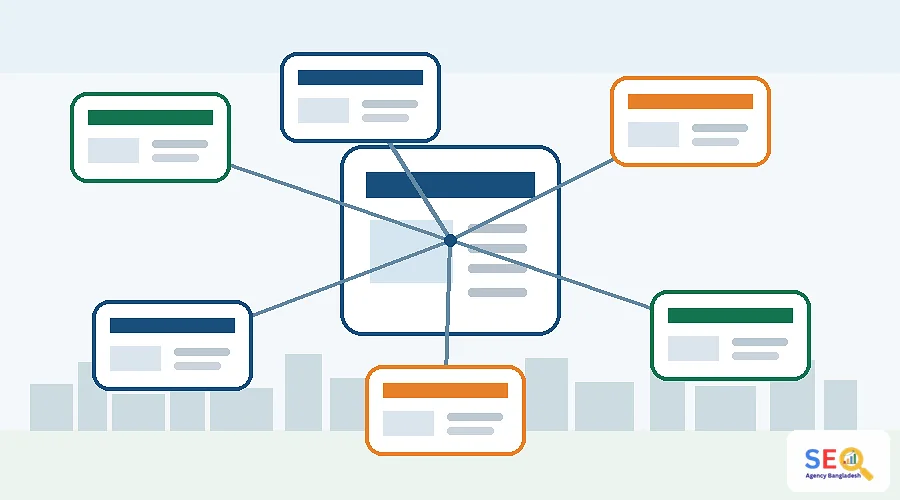
Useful outreach angles
- Expert contribution: offer a concise, genuinely useful comment when a journalist or niche publisher needs subject expertise.
- Original data: publish a small study, survey, benchmark or analysis that another writer can cite.
- Resource improvement: find an outdated or incomplete resource and offer a stronger, current reference where your page genuinely fills the gap.
- Digital PR: turn a real business development, research finding or useful public insight into a story that may interest relevant media.
- Partnership mentions: when a genuine supplier, association, event, research or business relationship naturally deserves attribution, ask whether an accurate mention is appropriate.
- Useful guest expertise: contribute an article when the publisher values the subject and audience first, not because you are buying a ranking link.
Personalization should come from research, not from inserting the recipient’s first name into a mass template. Mention the exact article, resource or audience need that makes your contribution relevant.
4. Write outreach that respects the publisher’s time
A good outreach message is short enough to understand quickly and specific enough to show that you selected the recipient for a reason.
State who you are, why you are contacting that particular site, what useful asset or contribution you have, and why it may help their readers. Do not promise rankings, demand a “dofollow” link, or disguise a paid placement as an editorial recommendation.
Before sending: read the target page. Check the publisher’s audience. Confirm that your suggested resource actually improves the page. If you cannot explain the value in two or three sentences, the opportunity may not be strong enough.
Follow up without becoming spam
One polite follow-up can be reasonable when the opportunity is genuinely relevant. Repeated automated messages, changing email addresses to bypass a rejection, or continuing after a publisher asks you to stop is not relationship building.
5. Handle paid, sponsored and contributed links correctly
Payment itself is not the problem when the placement is advertising or sponsorship. The problem is trying to buy ranking credit while presenting the link as an independent editorial endorsement.
Google recommends qualifying paid links with rel="sponsored"; nofollow is also accepted for paid links. User-generated links can use rel="ugc". A regular editorial link that was not paid for does not need a special relationship attribute simply because it points to another site.
This is especially important when evaluating sponsored articles, advertorials, influencer placements or paid contributor posts. Treat advertising as advertising. Do not make passing ranking signals a condition of payment.
6. Backlink tactics to avoid
A safe link building strategy is defined as much by what you reject as by what you pursue. Google’s current link-spam examples give a useful boundary.
- Do not buy links whose purpose is to pass ranking credit.
- Do not use automated programs or large networks to manufacture backlinks.
- Do not run excessive reciprocal-link exchanges purely for SEO.
- Do not depend on low-quality directories or bookmark sites as an authority strategy.
- Do not publish large volumes of thin guest posts with keyword-rich anchors.
- Do not hide links in widgets, templates or sitewide footers to manufacture scale.
- Do not place optimized links in forum signatures or comments purely for ranking manipulation.
- Do not create low-value articles whose main purpose is to hold backlinks.
Also be careful with offers that sell “DA 50+ links” as a commodity. A third-party score does not prove relevance, editorial quality, real readership or safety.
7. A practical Bangladesh link-building example
Imagine a Bangladesh B2B company that supplies specialized equipment. Instead of buying hundreds of unrelated directory links, the company could build one genuinely useful industry resource: a maintenance checklist, specification comparison or local compliance explainer reviewed by someone who understands the product.
The outreach list could then focus on trade publications, relevant business media, professional communities, suppliers, training organizations and industry writers whose readers may benefit from that resource. The company could offer a short expert comment, a data point or the full resource when it fits an article.
Some outreach will earn no link. That is normal. The objective is not a guaranteed placement rate. The objective is to create enough genuine value and relevance that editorial links become possible.
8. Monitor links without treating every change as a crisis
Backlink profiles change naturally. Pages disappear, websites restructure, publishers update content and some links become nofollow or vanish. Review trends, but do not assume every lost link needs to be rebuilt.
Track the pages receiving links, the relevance of referring sites, referral visits where available, important brand mentions and suspicious patterns. If you discover obvious spam that you did not create, do not panic simply because a tool flags it. Investigate first. Google’s spam systems are designed to identify and neutralize many manipulative signals.
More important than a raw referring-domain count is whether strong pages are earning the kinds of references that make sense for the business and topic.
9. Quality backlink checklist
- Is the source relevant? The site or page should serve an audience connected to your subject.
- Does the publisher have a real purpose? Look for useful content, clear navigation and evidence of editorial care.
- Would the link help a reader? The destination should add useful information at that point.
- Was the link earned editorially? Avoid arrangements designed mainly to pass ranking credit.
- Is the anchor natural? Do not insist on repeated exact-match commercial keywords.
- Is the surrounding content useful? A good link inside weak, mass-produced content is still a weak opportunity.
- Is sponsorship disclosed correctly? Paid placements should be qualified appropriately.
- Does the target page deserve the reference? Fix the destination before scaling outreach.
- Is the opportunity scalable only through automation? If yes, examine the risk carefully.
- Would you still want the mention without ranking credit? If yes, the relationship may have real marketing value.
10. Link building is not the same as internal linking or local citations
Backlinks come from other websites. Internal links connect pages within your own website. Citations are business mentions or listings used mainly for local entity and business information consistency. They can overlap in practice, but they solve different problems.
Keep those workflows separate so you can judge them correctly. An internal-link audit belongs inside on-page/site-structure work. Local directory consistency belongs inside local citation work. Editorial backlink acquisition belongs inside off-page authority building.
Link building questions for Bangladesh businesses
How many backlinks do I need to rank?
There is no universal backlink number. Competition, query intent, content quality, site history, relevance and many other factors differ by topic. Focus on whether your page deserves to rank and whether the links you earn are relevant and editorially credible.
Is guest posting safe for SEO?
Guest content can be legitimate when it informs another site’s audience. It becomes risky when the main purpose is large-scale link creation, especially with paid or optimized links that pass ranking credit. Keep audience value first and qualify sponsored relationships correctly.
Should I pay for backlinks in Bangladesh?
Do not pay for links whose purpose is to manipulate ranking signals. Advertising and sponsorship are legitimate business activities, but paid links should be qualified appropriately, such as with the sponsored attribute.
Are business directories useful backlinks?
A legitimate directory may be useful for discovery or local business information. Low-quality directories created mainly to sell or exchange SEO links are a different matter. Judge the directory by its audience, purpose and editorial standards rather than by a link metric alone.
What is the safest link-building method?
There is no single tactic that guarantees safe or successful links. The strongest foundation is a useful asset, relevant publisher research, transparent outreach and editorial choice. Avoid making ranking manipulation the reason a link exists.
Primary references used for this guide
Technical policy points in this article were checked against Google Search Central’s current Spam Policies for Google Web Search, Link Best Practices, Qualify Outbound Links documentation and Search spam update documentation.
Need a safer backlink plan?
If you want help researching relevant opportunities, reviewing backlink quality and building an outreach process without mass-link tactics, see our dedicated commercial service page.